Is AGI a Kill Switch That Ends Microsoft Access to OpenAI Models?
Artificial General Intelligence (AGI) — often portrayed as the ultimate breakthrough in AI development — has captured imaginations and fears alike. A recurring stale AGI narrative suggests that the dawn of AGI could act as a “kill switch,” abruptly terminating Microsoft’s privileged access to OpenAI’s models. However, this portrayal misses the nuances of the corporate and legal realities underpinning OpenAI, its associated entities, and their licensing arrangements.
In this blog post, we unpack this complex ecosystem, highlighting key players such as OpenAI, OpenAI Group PBC, and the OpenAI Foundation. We clarify how ChatGPT, often mistaken as a standalone company, is fundamentally an OpenAI product, and we explore the four essential facets of ownership: operator, legal structure, economic stake, and governance control. Finally, we examine the special board controls wielded by the OpenAI Foundation, the volatility of economic ownership, and the real implications of license terms extending through 2032.
Understanding the Entities: OpenAI, OpenAI Group PBC, and OpenAI Foundation
First, it's crucial to distinguish between the entities often cited in conversations about AGI and license rights:
- OpenAI: The organization behind the widely recognized products like ChatGPT and DALL·E. It operates as a research and deployment company.
- OpenAI Group PBC: The Public Benefit Company that houses the commercial activities related to OpenAI’s AI technologies. This entity licenses technology and coordinates with partners like Microsoft.
- OpenAI Foundation: A non-profit entity that exercises special governance rights over OpenAI Group PBC’s board, primarily to ensure adherence to OpenAI’s mission of safe and broadly beneficial AGI.
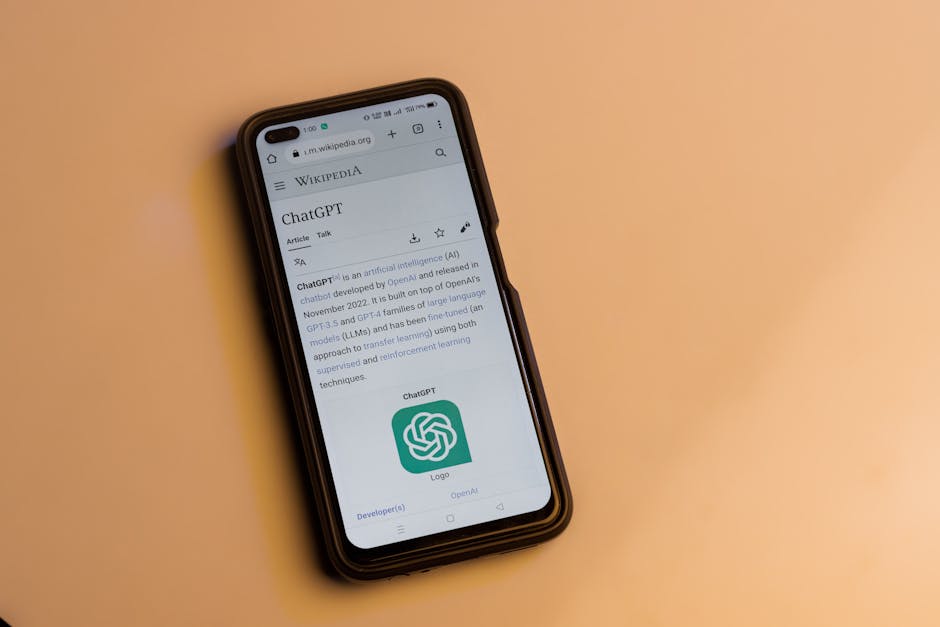
This structural division allows OpenAI to balance commercial innovation with ethical oversight and mission integrity. Despite some misconceptions, ChatGPT is not a separate company; it is a product developed and managed within the OpenAI framework.
ChatGPT: An OpenAI Product, Not a Separate Company
The AI assistant ChatGPT, which has become a household name, is often mischaracterized as an independent commercial entity or subsidiary. However:
- ChatGPT is a product of OpenAI, integrated into its broader AI services portfolio.
- Its development, release, and ongoing updates are managed internally at OpenAI.
- The licensing agreements and governance affecting ChatGPT are governed by OpenAI’s corporate and legal structures, not by some separate entity.
Understanding this prevents confusion that fuels the “kill switch” idea — since any termination of Microsoft’s access would have to navigate the broader OpenAI licensing and governance model, not a single product-level switch.
The Four Meanings of Ownership in the OpenAI Ecosystem
Ownership of AI technology and access rights can be interpreted in at least four ways, each with distinct implications for control and influence:
- Operator: Who physically runs and maintains the AI systems day-to-day (e.g., OpenAI’s engineering teams).
- Legal Structure: The specific corporate entities that hold IP rights and contractual obligations (OpenAI Group PBC, OpenAI Foundation).
- Economic Stake: Who holds financial interests, shares, or profit participation (including Microsoft’s stake in OpenAI’s commercial ventures).
- Governance Control: Who has voting rights and decision-making power on strategic matters (the OpenAI Foundation controls the board via special rights).
This distinction is critical when analyzing the possibility of a “kill switch” in the context of AGI emergence. For example, while Microsoft holds a significant economic stake and license to use OpenAI's models, it does not have unrestricted governance control. The OpenAI Foundation retains special veto or board appointment rights that influence strategic decisions, including license continuation.
OpenAI Foundation’s Board Control: The Hidden Governance “Kill Switch”?
The OpenAI Foundation is a pivotal actor often overlooked in mainstream narratives. It holds special rights over the board of OpenAI Group PBC — the commercial entity responsible for OpenAI’s AI model development and licensing agreements, including those granted to Microsoft.
The Foundation’s powers allow it to:
- Appoint or remove board members.
- Influence key strategic decisions concerning AGI development and deployment.
- Ensure that OpenAI’s mission—developing safe, broadly beneficial AGI—is never overridden by purely commercial interests.
This governance structure is not the same as a simple software or operational “kill switch” that https://suprmind.ai/hub/insights/who-owns-chatgpt/ flips off access to models instantly. Instead, it represents a high-level strategic control mechanism, designed to guard against misuse or mission drift.
License Terms and Duration: Microsoft’s Access Runs to 2032
One of the most important counterpoints to the “kill switch” myth is the fact that Microsoft has a long-term license to access OpenAI’s models. The relevant OpenAI Terms of Use documents, namely:
- OpenAI Terms of Use (European Terms)
- OpenAI Rest-of-World Terms of Use
Alongside commercial license agreements, these terms explicitly lay the groundwork for sustained cooperation. The licensing arrangement reportedly extends through 2032, providing Microsoft with steady access to API endpoints and models well beyond the emergence of any nascent AGI capabilities.
This duration emphasizes the fact that:
- An eventualist narrative, which assumes AGI triggers an immediate license shutdown, is inconsistent with contract terms and industry practice.
- Plans for AGI development inherently incorporate long-term partnerships and governance safeguards rather than ad hoc cutoffs.
Economic Ownership: A Volatile and Often Misreported Picture
Economic ownership of OpenAI’s commercial assets, including stakes held by Microsoft, venture partners, and employees, is fluid and complex. Headlines sometimes amplify or distort these figures, fueling inaccurate perceptions.
Key points to keep in mind include:
- Equity stakes and revenue-sharing agreements can be diluted or restructured as new funding rounds and launches occur.
- Economic ownership does not equate to governance control or operational command.
- Independent verification of ownership percentages is difficult due to private company status and confidentiality provisions in investor agreements.
Thus, an assertion that Microsoft’s economic stake equals unilateral control or that it would suddenly lose access due to an AGI event tends to conflate distinct ownership dimensions and oversimplify a much more intricate ecosystem.
Why the Stale AGI Narrative Needs a Fresh Reality Check
The stale AGI narrative that AGI is a kill switch ending Microsoft’s privileges suffers from multiple logical and factual weaknesses:
- It overlooks OpenAI’s layered corporate/legal structure and the pivotal role of the OpenAI Foundation’s governance.
- It ignores publicly available licensing agreements showing long-term access commitments.
- It mischaracterizes ChatGPT as a separate company and thus misattributes control rights.
- It ignores the volatile and opaque nature of economic ownership versus governance control.
- It dismisses the need for independent verification and due diligence in analyzing AI partnerships and contracts.
Conclusion: No Instant Kill Switch, But Governance Safeguards and Long-term Licenses
Far from being a sudden switch triggered by AGI appearance, Microsoft’s access to OpenAI’s models is governed by a robust set of long-term license agreements, nuanced governance controls — particularly those exercised by the OpenAI Foundation — and a complex ownership mosaic.

While AGI development will undoubtedly raise challenging ethical and operational questions, the existing structures aim to mediate these in a balanced, sustainable way. Microsoft’s relationship with OpenAI is expected to continue, shaped by cooperation, contractual commitments, and oversight mechanisms designed to ensure safety and broad societal benefits.
For analysts, investors, and the AI curious, always seek independent verification of claims around ownership and contract terms, and be wary of simplistic or overly sensationalist stale AGI narratives that do little justice to the complexity of the AI innovation ecosystem.
```